The Power of Celery: 10 Health Benefits of Celery You Never Knew About


Celery is often underrated, known mainly for its low-calorie content and its crunch in salads. However, this humble vegetable is a powerhouse of nutrients and offers a range of surprising health benefits that can enhance your overall well-being. In this blog post, we will explore ten unexpected health benefits of celery that might just convince you to add more of it to your diet.
- Nutrition Facts: What’s Inside a Stalk of Celery?
- Celery’s Anti-Inflammatory Properties
- Heart Health Booster
- Digestive Support and Stomach Protection
- Rich in Vital Nutrients
- Natural Detoxification
- Weight Loss and Satiety
- Antioxidant Powerhouse
- Supports Liver Health
- Antimicrobial and Immune-Boosting Properties
- Easy Ways to Incorporate Celery into Your Diet
- Conclusion
Nutrition Facts: What’s Inside a Stalk of Celery?
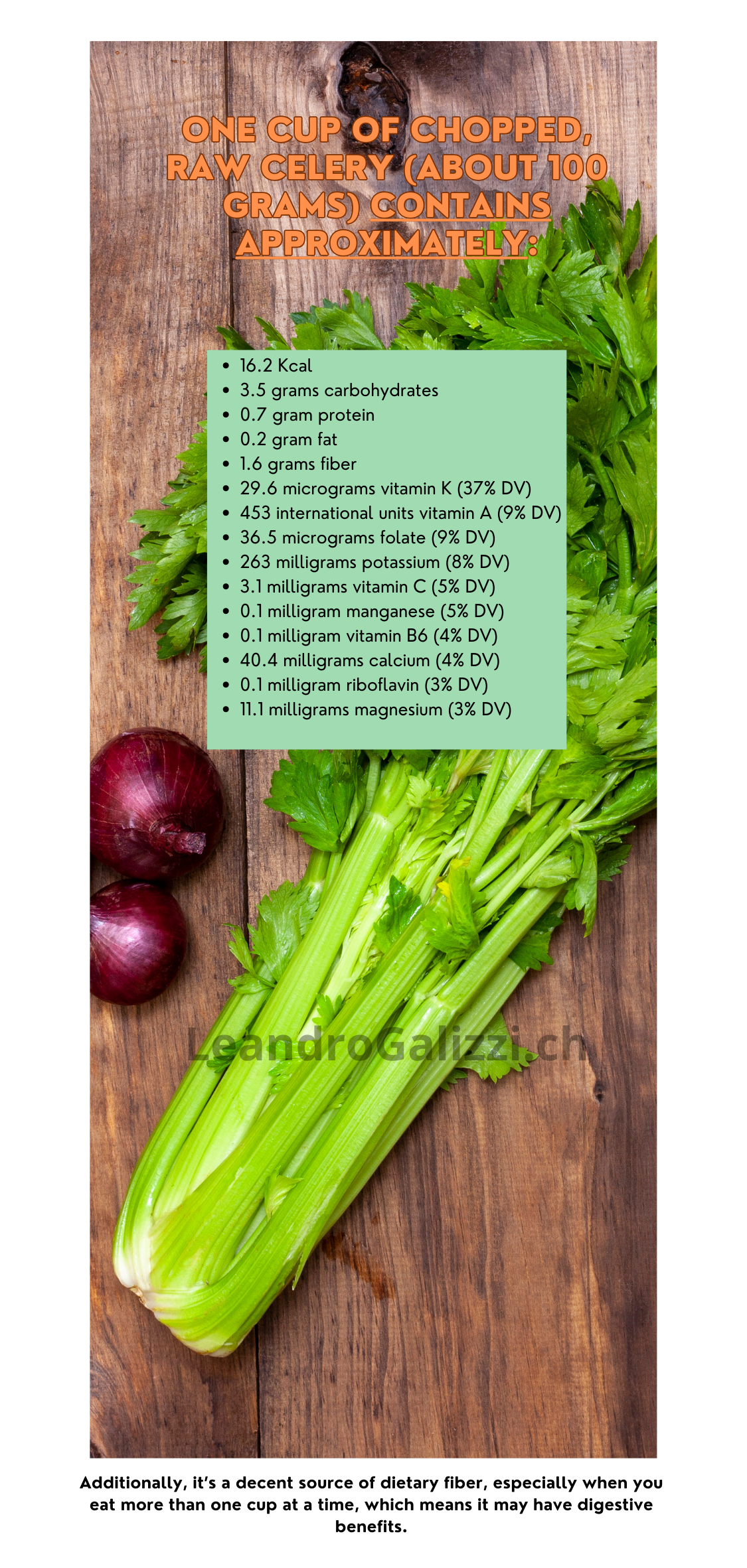
Celery is not just about crunch and water content. It is packed with essential nutrients that contribute to its many health benefits. Here’s a quick look at what you get in a single stalk of celery:
- Calories: About 10Kcal per stalk
- Water: 95% of celery’s weight
- Vitamins: A, K, and C
- Minerals: Potassium, Folate, Calcium, Magnesium
- Fiber: Approximately 1.6 grams per cup
These nutrients make celery a valuable addition to your diet, offering hydration, essential vitamins, and dietary fiber, all while being extremely low in calories.
Celery’s Anti-Inflammatory Properties
Chronic inflammation is linked to many illnesses, including arthritis and osteoporosis. Celery contains more than 25 anti-inflammatory compounds that can offer protection against inflammation in the body. One of the key compounds, apiuman, has been shown to decrease instances of stomach ulcers, improve the lining of the stomach, and modulate stomach secretions. Including celery in your diet can help reduce inflammation and the risk of associated diseases.
Heart Health Booster
Celery can play a significant role in promoting heart health. It contains a unique compound called 3-n-butylphthalide (BuPh), which has lipid-lowering effects. This compound helps reduce levels of bad cholesterol (LDL) and triglycerides in the blood. Additionally, celery helps regulate blood pressure by acting as a smooth muscle relaxant and improving blood flow. These properties make celery an excellent food for maintaining cardiovascular health.
Digestive Support and Stomach Protection
Celery is well-known for its digestive benefits, thanks to its high water content (around 95%) and fiber. These elements are crucial for maintaining a healthy digestive tract and preventing constipation. One cup of celery sticks contains about 1.6 grams of dietary fiber, which supports regular bowel movements and helps keep the digestive system functioning smoothly.
But celery’s benefits for digestion don’t stop there. The vegetable contains pectin-based polysaccharides, including a compound called apiuman, which has been shown to decrease instances of stomach ulcers, improve the lining of the stomach, and regulate stomach secretions. These properties make celery a valuable food for protecting your stomach and supporting overall digestive health.
Rich in Vital Nutrients
Celery is often considered a “negative-calorie” food, but it’s packed with nutrients that are essential for overall health. It’s a great source of vitamins A, K, and C, which are important for maintaining strong bones, a healthy immune system, and good vision. Additionally, celery provides minerals like potassium and folate, which are crucial for heart health and cell function.
Celery is also low on the glycemic index, meaning it has a slow, steady effect on your blood sugar. This makes it an excellent choice for people who need to manage their blood sugar levels, such as those with diabetes or prediabetes.
Natural Detoxification
Celery’s natural diuretic properties help the body eliminate toxins by increasing urine production and reducing water retention. This detoxifying effect is largely due to its high water and potassium content, which helps flush out excess fluids and sodium from the body.
Additionally, celery contains compounds that may help cleanse the liver. Studies suggest that celery can reduce fat buildup in the liver and improve liver enzyme function, contributing to overall liver health. This detoxifying effect makes celery an excellent addition to any diet aimed at improving organ health and reducing bloating.
Weight Loss and Satiety
Celery is a weight-loss-friendly food due to its low calorie content and high water volume. With only about 10Kcal per stalk, celery can add bulk to your meals without significantly increasing your calorie intake. This makes it an ideal snack or addition to meals for those looking to lose weight or maintain a healthy weight.
Moreover, the fiber in celery helps promote feelings of fullness and satiety, which can prevent overeating. By incorporating celery into your diet, you can enjoy a satisfying, crunchy snack that keeps you full longer while supporting your weight loss goals.
Antioxidant Powerhouse
Celery is packed with powerful antioxidants that help protect your cells, blood vessels, and organs from oxidative damage. This vegetable contains vitamin C, beta carotene, and flavonoids, along with at least 12 additional kinds of antioxidant nutrients. These antioxidants help neutralize free radicals in the body, reducing the risk of chronic diseases such as heart disease and cancer.
Additionally, celery’s phytonutrients have been shown to reduce inflammation in the digestive tract, cells, and organs. By including celery in your diet, you are giving your body a strong defense against oxidative stress and its harmful effects.
Supports Liver Health
Your liver plays a crucial role in detoxifying your body, and celery can help support this important organ. Research has shown that celery, when combined with other foods like chicory and barley, can reduce fat buildup in the liver and improve liver enzyme function. This can help protect the liver from damage and improve its ability to cleanse your body of toxins.
Moreover, celery’s high water content and natural diuretic properties aid in flushing out toxins, which further supports liver health. For those looking to maintain or improve their liver function, adding celery to their diet is a smart choice.
Antimicrobial and Immune-Boosting Properties
Celery has been used for centuries in traditional medicine for its antimicrobial properties. Modern research supports this use, showing that celery contains compounds that can help fight bacterial infections and boost the immune system. Celery seeds, in particular, are rich in these antimicrobial components and have been used to treat infections and prevent illness.
In addition to its antimicrobial properties, celery is rich in vitamin C, which is well-known for its immune-boosting effects. Including celery in your diet can help strengthen your immune system and protect your body against common infections.
Easy Ways to Incorporate Celery into Your Diet
Incorporating more celery into your diet is simple and versatile. Here are a few easy ways to enjoy this nutritious vegetable:
- Raw: Enjoy celery sticks as a crunchy snack, either on their own or dipped in hummus, peanut butter, or a healthy dressing.
- Juices and Smoothies: Add celery to your favorite juice or smoothie recipes for an extra dose of hydration and nutrients.
- Soups and Stews: Include chopped celery in soups, stews, and broths for added flavor and nutrition.
- Salads: Toss celery into salads for a satisfying crunch and a boost of vitamins and minerals.
- Cooking: Use celery as a base for stir-fries or sautés, or add it to casseroles and baked dishes.
For optimal freshness and nutrient retention, store celery in the refrigerator and consume it within five to seven days of purchase. Remember to use the leaves, as they are packed with nutrients and can add flavor to your dishes.
Conclusion
Celery is more than just a crunchy, low-calorie snack. It’s a nutrient-dense vegetable that offers a wide range of health benefits, from reducing inflammation and supporting heart health to boosting digestion and aiding in weight loss. By incorporating celery into your daily diet, you can take advantage of its many health-promoting properties.
Now that you know the power of celery, why not start adding more of it to your meals?